CRIB is an independent passion project led by 1 person interested in Russian military equipment. This blog focuses on Russian military vehicle news, historical events and development. Any coinciding information or the author's perspective on reality is purely random.
Ultra-1 and Ultra-2 AT gun rounds
Get link
Facebook
X
Pinterest
Email
Other Apps
-
Old Danish 28/20mm rounds Designed by Hermann Gerlich while working for Schultz & Larsen in Denmark.
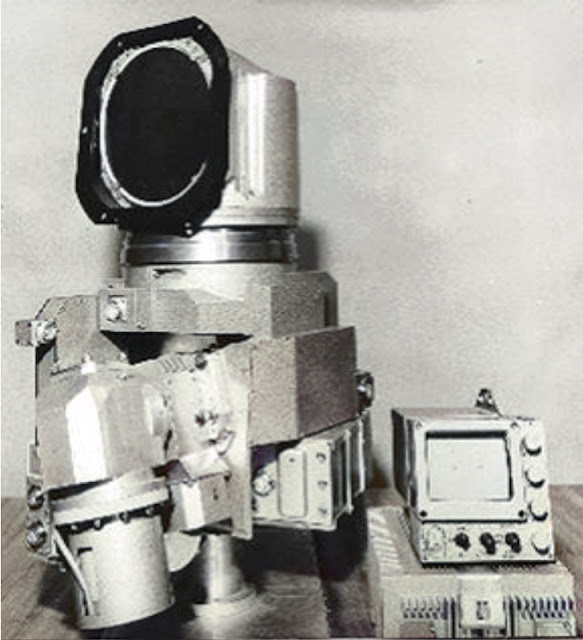
When covering Soviet sight technology, there are always some interesting designs and approaches to solving an issue. It is a common fact that the Soviet Union in the 1980s-1990s was quite behind in thermal sight technology. Only in the 1990s, but to be specific in 1992, did the Soviet Union, now Russia, start to field small batches of thermal sights on their tanks, primarily T-80Us and some of the early T-90 variants, which had just recently entered service. Russia's journey through creating its own domestic thermal sight traces back to 1982. The 1980s were quite an important time for the 'Krasnogorsk Factory named after S.A. Zverev', which is still to date, an optical Engineering and optoelectronics factory. The factory is primarily known for making domestic Soviet cameras back in the day. However, that's not the only thing that the factory produced back then. Close to the mid-1980s, the facility was contracted to develop new thermal sight technology for the Soviet M...
Related topics: "AGAVA" - "AGAVA-2 "and its confusing history Thermal imagers were classed as; Gen-I, Gen-II and Gen-III. Gen-I sights featured the most basic technology due to them being the first of their type. Gen-II sights commonly improved on Gen-I technology by utilizing similar but more refined technical advancements or used completely new methods. Gen-III sights used new advanced technology that is no longer associated with Gen-II and additionally features new materials for photo-elements and ways of processing. Image 1 (For full resolution open the image in a new tab) The table above represents domestic Soviet and early Russian thermal modules/sights. Generations are split into 3 different time periods, Gen-I sights primarily appeared in the 1980s but also made appearances in the 1990s, Gen-II sights appeared in the 1990s and Gen-III sights appeared in the late 1990s and 2000s. Gen-I systems: Utilize linear photo-receiver with 2 types of indicators; b...
Back in 2018, a new programme was started. This programme's focus is to create domestic equipment for Russian armoured vehicles, specifically optics. This is so that the Russian army can stop depending on the french company "Thales" and their Catherine technology. T-72B3 received new internal components for the Sosna-U sight, phasing out any foreign components. As for the T-90M/T-90MS, something else was done. Previously, the T-90M/T-90MS employed the Sosna-U sight, which featured french components from Thales. However, the internals of the sight was not simply replaced. This time, a completely new domestic sight was created under the name PNM-T. The sight was reportedly made by the PJSC ANPP TEMP-AVIA in 2018 or 2019. The first appearance was in the Telekanal Zvezda show, during the episode about the Proryv-3 (T-90M). In this episode, a new plaque can be seen with the name of the sight. Its first public physical appearance, however, was at the Army-2019 event. The doo...



Comments
Post a Comment