Posts

Showing posts with the label AC

GM-569 life support systems

Image
 The GM-569 series of tracked armoured vehicles is a universal platform created in 1978 by the Mytishschi Machine-Building Plant. In 1980, several modification variants of the GM-569 were made. The GM-577, GM-579 and GM-567. GM-577 and GM-567 are used as platforms to launch SAMs while the GM-579 is used as a mobile command post. In the 90s, a new generation of GM-569 chassis was laid out. In 1990 the GM-562, 1992 GM-5959, 1993 GM-5951 and GM-5952, in 1994 GM-5955 (chassis of the "TOR-M1") and in 1995 the GM-5975 (chassis of the "Tunguska-M1"). The hull structure comprises 3 segments; a crew compartment in the front, a central section (combat section) and an engine-transmission section, which are hermetically isolated. The GM-569 series strives far from its predecessor hull GM-575 used on the "Shilka", "Kub" and others. While the chassis is intended for larger combat modules as listed previously, the volume of the GM-569 is much larger, which remo...
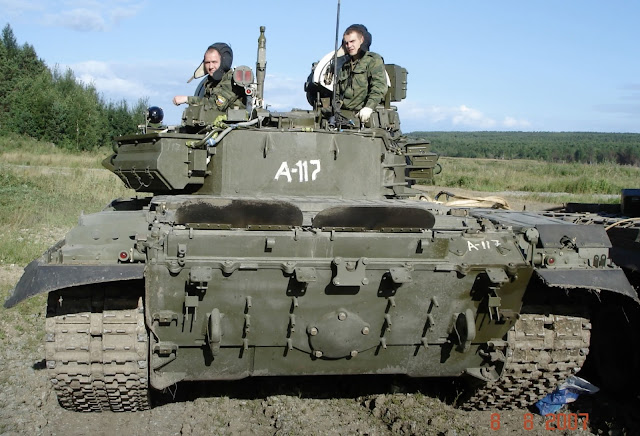
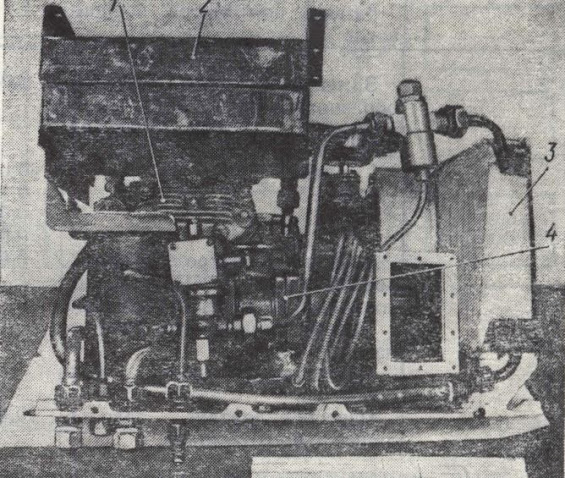
AFV Microclimates and air conditioning system integration on Soviet MBTs

Image
A tank's overall performance during combat does not only depend on the technical characteristics . It also depends on the psychological, emotional and biological factors of the crew and their given tasks.  One way to ease the crew's operating stress is to automate certain processes of the vehicle. But in some cases, this solution does not work, due to the higher qualification requirements for the operation. This issue is more significant when the overall operation complexity of certain modules becomes more delicate and requires highly qualified personnel. As a result, this increases the stress level of crew members. This may be less of an issue with a highly trained crew member but on the other side, the overall performance factor of a crew member heavily depends on the surroundings in which he performs, especially in extreme conditions, such as the crew compartment of any AFV, which can become a harsh operating climate due to the fluctuating microclimate.  A vehicle'...

Development of air-conditioning units for BMPs

Image
 One way to improve the combat effectiveness of AFVs is the utilization of an inbuilt air-conditioning unit. Back in the 1960s-1970s, the development of an air-conditioning unit for BMP vehicles was troublesome. Consisting of providing the crew and troops with an internal microclimate. The complex requirements that were set, required an AC unit to be compact, powerful and easy to be integrated without the need for heavy hull modifications.  In addition to the requirements, development was based around the already existing thermal input points; hull roof, engine radiator, live crew compartment and troop compartment. All these points generated a significant amount of heat. In climates with an ambient temperature of 40 °C and internal compartment temperatures of 28 °C, the total energy production would reach 41,9 MJ/h.  Calculations showed that mounting an AC unit powerful enough to even out the 41,9 MJ/h heat generation would be impossible due to the needed size and weight....